Dissolution: Why Our Civilization is Dying

Martino Mora is a leading figure on the rebel front seeking to resist globalist oppression in Italy. In 2021, he also had his “fifteen minutes of fame” for a brilliant act of civil disobedience, having refused to teach a high school class in which a “gender” farce was being staged. Starting from that absurd event—reminiscent of the Cultural Revolution in Maoist China—Professor Mora began a journey of cultural dissemination that has made him a significant point of reference for unconventional thought.

In 2025, his book Dissoluzione. Perché la nostra civiltà sta morendo (Dissolution: Why Our Civilization is Dying ) was released. It is an important text that analyzes the stages of the Via Crucis that led the Western world to its current suicidal stance, which will likely end the civilization built on Greek philosophy and the Christian religion. This essay offers insights to identify and explore the causes that have led to the decadence of Western civilization.

Dissolution is a precise and detailed diagnosis of the causes of the unstoppable decline and the cupio dissolvi (desire for self-destruction) with which the Euro-American world has become afflicted. The discussion centers on the denunciation of the manipulative and fraudulent nature of liberal democracy, born from a long march of “calculating reason” and economism that have reduced the world to a market and man to a consumer. The point of no return was reached with the movement of 1968, an authentic anti-Christian epiphany that began the dystopian nightmare of the “upside-down world.” At the root of this approach to reality is individualism, the origins of which can be traced back to the problem of Universals that animated philosophical debate in the Middle Ages and concluded with the substantial primacy of nominalist thought, from which modern subjectivism takes shape. Mora supports his discourse with classic authors of the critique of modernity, predominantly of Catholic origin, such as Joseph De Maistre and Louis De Bonald. However, there are also insights derived from Nietzsche, Spengler, Evola, and Guénon, as well as references to the anthropologist Louis Dumont and contemporary scholars who have investigated the causes of nihilism, such as Emmanuel Todd.

Furthermore, an author Mora considers particularly suitable for examining the spirit of the “civilization of money” is Georg Simmel, author of the essay The Philosophy of Money. That text, published in 1900, can still be very useful in illustrating the capacity for “internal desertification” that the mercantilist spirit exerts on souls.

Mora divides the book into chapters that speak of globalist phenomena and techniques for the flattening of humanity: the Great Replacement, the Homosexualist Revolution, the eclipse of the Catholic Church…

This last theme is particularly close to the heart of Mora, a Catholic increasingly perplexed in the time of the “hallucinated ministries” of Bergoglio and his successor Prevost, whom Mora defines as a “Bergoglio with a human face”—that is, slightly more moderate in language than the Argentine Pope, but equally intent on dissolving the Church in the acid of ecumenism and ethical relativism. In Christian terms, globalization has all the characteristics of a satanic theocracy!

Finally, the book sums up the current apocalyptic climate, asking what posture “differentiated humanity”—those who do not accept globalist standardization—should adopt.

Under the banner of “human rights,” the globalist abomination has made a market of everything. Even children can be bought, starting from eggs and sperm, and there are even those who theorize the possibility of selling body organs, as argued by Argentine President Milei.

To supplement Mora’s observations, it should be noted that the masterpiece of mercantilist civilization has been the ability to monetize feelings. Progressive ideologies, based on hatred against the heterosexual white male, have succeeded in establishing legislation that punishes what they deem “hate” when such a feeling is directed at the categories the Left wants to install at the top of the social pyramid (mainly immigrants and homosexuals). The purpose of this legislation is not only to silence dissidents but, above all, to extract money in the form of compensation for “moral damages.” A similar argument applies to the legal apparatus regulating relationships between men and women, which has now become a tool for exercising legalized extortion against males.

We can expect, at this point, that any human relationship, even of a purely friendly nature, will be subjected to legal regulation and economic quantification!

Mora dedicates the final parts of the book to the Italian political and media scenario, which is dismal to say the least. The “sovereigntist” parties that should have been opponents of globalism are literally kept on a leash by the system: in Italy the Left dictates the political agenda even when it loses elections. In a country condemned by pitiless demographic statistics, the “Right” has done no better than to go along with immigrationism and feminism. While identity-based political movements effectively counter the globalist “Empire of Evil” in some countries, in Italy, the “Right-wing” political personnel appear to be of the lowest human level and, moreover, reflect the attitude of a passive, unmotivated population now sunk into a catatonic state.

Social disintegration is the fuel of the free market, which is why the Left is flooded with money from most of the great capitalists, giving progressives a decisive advantage in creating a manufactured consensus. However, a reason for hope is precisely this total disconnection between the ruling classes and the population. Even the oligarchies know that there is a large majority of the population that feels the weight of globalist tyranny: the victims of globalism are only waiting to become aware of their subordinate condition and have nothing to lose but… their chains!

As mentioned at the beginning, Mora’s book constitutes a careful diagnosis but remains rather vague regarding possible solutions. On a human level, all seems lost; however, Mora, as a Catholic, trusts in a divine intervention to rescue the Church understood as the Mystical Body of Christ (while placing no hope in a clergy sold out to globalist power).

On this point, we observe that a debate could be opened that would lead far: is Christianity the solution or is it the problem?

Mora himself cites Chesterton’s famous maxim: “The modern world is full of the old Christian virtues gone mad. “

After all, even without reaching Nietzsche, Machiavelli already noted that the Christian religion makes souls effeminate…

Can the message of Christ be the cure for the evil of individualism? Can it mean something that the Catholic Church, in the last half-century, has become the political training school for the Left?

Posterity will judge…

Mora’s essay is nonetheless a text that offers many useful indications for deconstructing progressive mythologies, regardless of the cultural backgrounds of the readers.

For now, let us treasure the insights offered by the courageous Milanese professor, keeping in mind the words of Joan of Arc that he himself quotes in his book:

“We must give battle, so that God may grant the victory!”

***


Martino Mora, Dissoluzione. Perché la nostra civiltà sta morendo,

Edizioni Radio Spada, 2025, 190 pp.

Gorean Fiction: An Invitation to Rediscovery

Female acquiescence to submission is one of the most intriguing elements of the male/female relationship. This factor of romantic alchemy can manifest with various nuances and modalities, reaching as far as erotic fantasies of sexual dominance. Western culture itself debuts with the story of a master/slave relationship: Achilles and Briseis. In more recent times, women themselves have been able to describe this aspect of the couple’s relationship, producing a 20th-century masterpiece like Pauline Réage’s Story of O, as well as a major pop success like E.L. James’s Fifty Shades of Grey.

Even the Fantasy genre found an original interpreter of this narrative vein in John Norman, the American author who created the Gor saga. John Norman is actually the pseudonym used by John Frederick Lange Jr., who was a professor of philosophy at several American universities and who, alongside his academic career, developed successful lines of both fiction and non-fiction writing.

The fiction set on the planet Gor unfolds in a barbaric and savage world where gender roles are strongly differentiated and characterized: brawny and courageous men, protagonists of epic feats, own concubine-slaves who live their existential status—made of humiliation and punishment—as an unalterable condition. The relationship between slaves and masters is ritualized and governed by precise rules of conduct: the slave of Gor, called a “Kajira,” observes a rigid protocol in dress, behavior, and body posture.

Norman himself states that his narrative work is inspired by three fundamental authors of Western culture: Homer, Nietzsche, and Freud. From Homer, Norman took the description of the archaic values of a warrior society; from Nietzsche, the concept of hierarchy and the cult of strength; from Freud, the idea that sex is a central element in human psychology.

“Gorean” literature, which began with Tarnsman of Gor in 1966, enjoyed flattering public success in the 1970s: overall, “Gorean” books have reached a circulation in the hundreds of thousands of copies. The latest title is number 38 in the series: Treasure of Gor (2024). Many of these books have been translated into French, Spanish, German, Italian, Russian…

The saga also inspired two films: Gor (1987), directed by Fritz Kiersch, and Outlaw of Gor (1988), directed by John Cardos. These two films focus primarily on the “Heroic Fantasy” aspect of Norman’s tales, while the more sexualized aspects of the stories were significantly toned down. These cinematic productions testify to the popularity of the Gor Saga even twenty years after the release of the first titles.

Needless to say, the success of the “Gorean” series infuriated feminists. “Progressives,” unable to grasp the playful and parodic aspects of a “violence” staged as literary fiction, tried to ban the distribution of the books, succeeding on some occasions in momentarily dissuading publishers from releasing new ones. The series, however, has always managed to continue with continuity…

Indeed, Gorean novels also take the form of philosophical tales that unmask the hypocrisies of the “liberal” world. Particularly indicative in this sense is one of the most famous titles: Slave Girl of Gor. In this book, the protagonist is a beautiful model who is kidnapped from Earth and brought to the planet Gor, where she is forced to adapt to the new lifestyle.

Some quotes from the book provide an idea of the views manifested in “Gorean” thought.

The inhabitants of Gor cannot fathom the catatonic state into which the male population of Earth has sunk:

“Could they believe a world might exist where men, shouting political slogans, vied with one another to surrender their dominance, hastening gleefully to their own castration?”

The protagonist then discovers that her new status corresponds to a more natural condition than that imposed by social conditions on Earth:

“My femaleness had been suppressed on Earth, first by my own conditioning, the confused product of centuries of intellectual and social pathology, and, secondly, by the set of societal institutions in which I had grown up and existed, rather than lived, institutions to which sexuality was irrelevant, if not inimical.”

And again:

“The condition of slavery makes a woman very beautiful. It removes inhibitions to the manifestation of her femininity and her deepest needs.”

What else is there to say? Gorean writing has made “political incorrectness” its hallmark, creating an anti-feminist epic of non-negligible literary quality: this is enough to make its rediscovery stimulating and revitalizing in a time when the “woke” flood risks shipwrecking humanity in an unprecedented anthropological catastrophe…

***

English Wikipedia page dedicated to the fiction of the Gor cycle:

https://en.wikipedia.org/wiki/Gor


Il “silenzio” di Claudio Catani

Claudio Catani ama dire di se stesso che scrivendo poesia ha perso una grande occasione: quella di stare zitto!

Ma se Claudio Catani fosse stato zitto l’umanità non avrebbe potuto ascoltare una delle voci poetiche più dense e geniali del XXI secolo.

Fortunatamente Catani ha pubblicato le sue poesie, vincendo un’istintiva avversione per la comunicazione coi suoi simili e offrendo al pubblico la testimonianza culturale di un autore che può a buon diritto essere annoverato tra i grandi apolidi dell’esistenza che, proscritti dal genere umano, hanno sublimato il dolore esistenziale in una scrittura cristallina.

Il primo libro di Claudio Catani è Frammenti d’essere. Questa silloge evidenzia i caratteri distintivi della poesia di Catani: un’espressione scarna e asciutta, un linguaggio colto che lascia trasparire la solida cultura classica dell’autore, un verso breve e incisivo che fissa la parola in immagini dai tratti forti e decisi. Catani si addentra nel buio del nichilismo con passo sicuro, come se fosse nel suo ambiente naturale: lui stesso infatti dichiara che l’universo tutto non è altro che una mera finzione biologico-circostanziale priva di ogni immaginabile, presunta validità ulteriore. Si tratta di una visione del mondo che richiama esiti di nichilismo radicale quali solo Emil Cioran ha saputo raggiungere. Per esempio Catani descrive certi orizzonti neoutopici, mostrandone tutta la gelida astrattezza, nella poesia dal titolo “Les philosophes nouveaux”:

Sisifo istrione

e ci par troppo

persino il tempo

che nominato hanno

dei trent’anni.

A noi affaticati

da un orrendo tedio

meditabondo.

Diciamo insonni

quant’è lunga e greve

un’epoca di stenti cerebrali

però

non mancherò stasera

alla tua festa.

Dirò la testa consumata

ma non le labbra a cercarne altre

non l’umido sguardo esistenziale

progressista

a lievitare atmosfere improvvisate

in quel d’anonima

che ci lascia saccheggiare.

Non credo stasera

mi resti il tempo

di pensare a quanto già

son mortalmente stanco.

____________________________________________

Nella nota biografica il poeta si definisce così: «Claudio Catani, tosco-romagnolo come l’Appennino in cui fu gettato, sopravvive in Santa Sofia, pago di quella contrada scabra». E nel libro si trovano anche efficaci descrizioni paesaggistiche dei luoghi del poeta che evidentemente si prestano a metafore esistenziali, come in “Appennino”:

Sasso

che rivedo

grandeggiare folle

nello schianto di saetta

passan genti

che la terra coglie

d’animali

le generazioni

segnate tutte a un destino

eguale.

Non tu

atride muto

dal volto franto.

Fossi come te

roccia al sentire.

_____________________________________________

Catani non vede orizzonti messianici, per lui non c’è Terra Promessa da raggiungere, come ci dice in “Furia di Mosè”:

Non è terra Dio!

È rossa

maledetta

gonfia di bestemmia

gravida di lacrime.

Nel suo grembo

cova larve di spettro

non germe di frutti

fino alla bocca

fendono come lame

le fosse nel petto

rigurgiti sepolcrali

in aliti di peste.

Questa è terra promessa?

S’involva la luce

su noi traditi

chè non ha motivo la speranza.

Tra queste siepi avvizzite di memoria

una densa cappa di rancori

rallenta pensieri nuovi

di concordia.

Dio!

Posano attenti i timpani

della mia sorda collera.

Il poeta è decisamente più incline a riconoscersi negli schemi della tragedia classica:

grimaldelli di luce

mi disserrano gl’occhi

d’Edipo

feriti.

______________________________________

E ancora, Catani dedica una lunga sequenza a Prometeo, simbolo del fallimento esistenziale cui siamo inevitabilmente condannati.

La seconda raccolta di Catani segna un importante salto di qualità, segnalandosi come la più convincente di quelle finora pubblicate, e riassume nel titolo il senso della vicenda culturale dell’autore: Silenziario.

In questo libro la nota biografica riporta: «Claudio Catani, adespoto apolide, è attualmente assorto in paradossi zenoniani».

Qui il dire poetico diviene particolarmente penetrante, con un più frequente uso di rime e assonanze, e con una ricerca di musicalità che si evidenzia fin dal componimento d’apertura “Verrà il Silenzio”:

Non provinciale

né dei dintorni

questo è già un mondo

senza contorni.

Dura la gleba

il solco avaro

mercede il sudore

d’un pomo amaro.

Com’essudario

su questa terra

non poserà alcuna memoria

l’età sottile

la spazzerà via

questo riparo di filo Sophia.

Seguirà il tutto

com’è necessario

giusta la legge del silenziario.

___________________________________________

Tornano riferimenti al mondo classico, alla tragedia greca, a figure mitologiche che rappresentano un’umanità in bilico sull’orlo dell’abisso. Il linguaggio si avvale di metafore sontuose che raggiungono il vertice espressivo in “Assurdo come armonia”:

L’ugola della notte

trilla ancora di gemme serrate

nello scrigno dei campi.

Pendule da rami

scroscianti ouvertures di foglie

rimano col rullo delle onde.

Non ha posa

non ha posa il fiume

nell’inventare la greve passacaglia

del suo corso:

basso ostinato

che i pensieri m’ha guidato

come un padre i primi passi.

Oggi ancora là

col suo assurdo andare di legni

e di memoria.

Lunga traccia d’inchiostro

che scivola nel buio

lasciato dalle stelle.

______________________________________________

E il viaggio nell’assurdo continua fino a richiamare nell’ultimo testo il manichino che lo stesso Catani ha disegnato per la copertina del libro:

Manichino silente

l’essere non pensa

il vuoto sì

quello dell’assenza.

La terza raccolta di Catani è Paradisi di tormento. Il testo iniziale ha il titolo indicativo di “Cruciatus”:

E l’Angelo vidi del tormento

in odio a due poteri

che nel discernimento

trasse d’oppositi voleri.

L’infante capo chino

scomposto irsuto crine

gemeva solitario l’ali

piantate al sudicio congiario.

Scarniva massacrato

per la pietà divina

le membra sue corrotte

di lue luciferina

Bestia e Gran Demiurgo

per una volta invero

accordo avean stretto

nel giudicarlo reo.

E mi guardò afflitto

poi gorgogliò parola:

“a te non fu già conto

fratello delirante

l’uno all’altro mai

può starsene distante.

Li ripudia entrambi

e tale è la semenza

dell’incorrotto mio sentire

reo d’innocenza”.

_______________________________________________

Inutile sottolineare come in queste immagini infernali si senta l’influenza di Apocalisse 23, il libro che ha posto un sigillo inconfondibile sulla poesia del XXI secolo. Inoltre alle consuete immagini classiche, Catani affianca interessanti rielaborazioni di temi desunti da Leopardi, da Foscolo, da Céline.

I lettori avranno modo di apprezzare e di valutare a fondo queste tre raccolte, che meritano di essere annoverate fra i titoli più originali della poesia contemporanea, in attesa di assistere a nuovi sviluppi del lavoro letterario di Claudio Catani.

***

Claudio Catani, Frammenti d’essere, Ibiskos Editrice, Empoli 2000, pp.72

Claudio Catani, Silenziario, Società Editrice «Il Ponte Vecchio», Cesena 2003, pp.80

Claudio Catani, Paradisi di tormento, Libroitaliano World, Ragusa 2007, pp.48

Narrativa Gorean: un invito alla riscoperta

L’accondiscendenza femminile alla sottomissione è uno degli elementi più intriganti della relazione uomo/donna. Questo fattore dell’alchimia sentimentale può manifestarsi con vari accenti e modalità, fino ad arrivare a fantasie erotiche di dominazione sessuale. La cultura occidentale esordisce proprio con la storia di una relazione padrone/schiava: Achille e Briseide. In tempi più recenti proprio le donne hanno saputo descrivere questo aspetto del rapporto di coppia producendo un capolavoro del Novecento come Histoire d’O di Pauline Réage, nonché un grande successo pop come Cinquanta sfumature di grigio di E.L. James.

Perfino il genere Fantasy ha trovato un originale interprete di questa vena narrativa in John Norman, autore americano che ha ideato la Saga del mondo di Gor. John Norman è in realtà lo pseudonimo utilizzato da John Frederick Lange Jr., che è stato professore di filosofia in diverse università americane e che parallelamente all’attività accademica ha sviluppato fortunati filoni di scrittura narrativa e saggistica.

La narrativa ambientata sul pianeta Gor si svolge in un mondo barbarico e selvaggio, in cui i ruoli sessuali sono fortemente differenziati e caratterizzati: uomini nerboruti e coraggiosi, protagonisti di imprese epiche, sono proprietari di concubine-schiave, le quali vivono il loro statuto esistenziale, fatto di umiliazioni e di punizioni, come una condizione immodificabile. Il rapporto delle schiave coi padroni è ritualizzato e scandito da precise regole di condotta: la schiava di Gor, chiamata “Kajira”, osserva un rigido protocollo nell’abbigliamento, nel comportamento, e nelle posture del corpo.

Lo stesso Norman afferma che la sua opera narrativa è ispirata a tre autori fondamentali della cultura occidentale: Omero, Nietzsche e Freud. Da Omero Norman ha preso la descrizione dei valori arcaici di una società guerriera, da Nietzsche il concetto di gerarchia e il culto della forza, da Freud l’idea che il sesso sia un elemento centrale nella psicologia umana.

La narrativa “Gorean”, cominciata con Tarnsman of Gor nel 1966, ha conosciuto un lusinghiero successo di pubblico negli anni ‘70: nel complesso i libri “Gorean” hanno raggiunto una diffusione nell’ordine delle centinaia di migliaia di copie. L’ultimo titolo è il numero 38 della serie: Treasure of Gor del 2024. Molti di questi libri sono stati tradotti in francese, spagnolo, tedesco, russo…

In italiano sono stati tradotti soltanto due titoli: Gor (1989) e Il fuorilegge di Gor (1991), entrambi stampati dall’editore Fanucci.

La saga ha ispirato anche due film: Gor del 1987 con la regia di Fritz Kiersch e Ritorno a Gor del 1988, con la regia di John Cardos. Si tratta di due pellicole incentrate soprattutto sull’aspetto “Heroic Fantasy” dei racconti di Norman, mentre gli aspetti più sessualizzati delle storie sono stati decisamente smorzati. Queste produzioni cinematografiche testimoniano la popolarità della Saga di Gor anche dopo vent’anni dall’uscita dei primi titoli.

Inutile dire che il successo della serie “Gorean” ha fatto infuriare le femministe. I “progressisti”, incapaci di cogliere gli aspetti ludici e parodistici di una “violenza” messa in scena come finzione letteraria, hanno cercato di vietare la diffusione dei libri riuscendo in alcune occasioni a dissuadere momentaneamente gli editori dal pubblicarne di nuovi. La serie tuttavia è sempre riuscita a proseguire con continuità…

I romanzi “Gorean”, in effetti, hanno anche l’aspetto di racconti filosofici che smascherano le ipocrisie del mondo “liberal”. Particolarmente indicativo in questo senso è uno dei titoli più celebri: Slave Girl of Gor.

In questo libro la protagonista è una bellissima modella che viene rapita dalla Terra e portata sul pianeta Gor, dove si trova costretta ad adattarsi al nuovo stile di vita.

Alcune citazioni tratte dal libro rendono l’idea delle vedute che si manifestano nel pensiero “Gorean”.

Gli abitanti di Gor non riescono a capacitarsi dello stato catatonico in cui è sprofondata la popolazione maschile della Terra:

«Potevano credere che potesse esistere un mondo in cui gli uomini, gridando slogan politici, gareggiassero tra loro per rinunciare al proprio dominio, affrettandosi gioiosamente verso la propria castrazione»?

La protagonista, poi, scopre che il suo nuovo status corrisponde a una condizione più naturale di quella imposta dalle condizioni sociali sulla Terra:

«La mia femminilità era stata repressa sulla Terra, in primo luogo dal mio stesso condizionamento, il prodotto confuso di secoli di patologia intellettuale e sociale; e, in secondo luogo, dall’insieme delle istituzioni sociali in cui ero cresciuta ed ero esistita – piuttosto che vissuta – istituzioni per le quali la sessualità era irrilevante, se non ostile».

E ancora:

«La condizione di schiavitù rende una donna particolarmente bella. Rimuove le inibizioni alla manifestazione della sua femminilità e dei suoi bisogni più profondi».

Che altro dire? La scrittura “Gorean” ha fatto della “scorrettezza politica” il suo tratto distintivo, creando un’epica antifemminista di qualità letteraria non disprezzabile: tanto basta a rendere stimolante e rivitalizzante la sua riscoperta in un tempo in cui l’alluvione “woke” rischia di far naufragare l’umanità in una catastrofe antropologica senza precedenti…

***

Al seguente link la pagina wikipedia in inglese dedicata alla narrativa del ciclo di Gor:

Gor – Wikipedia

Anonymous of the Tower: A Global Enigma

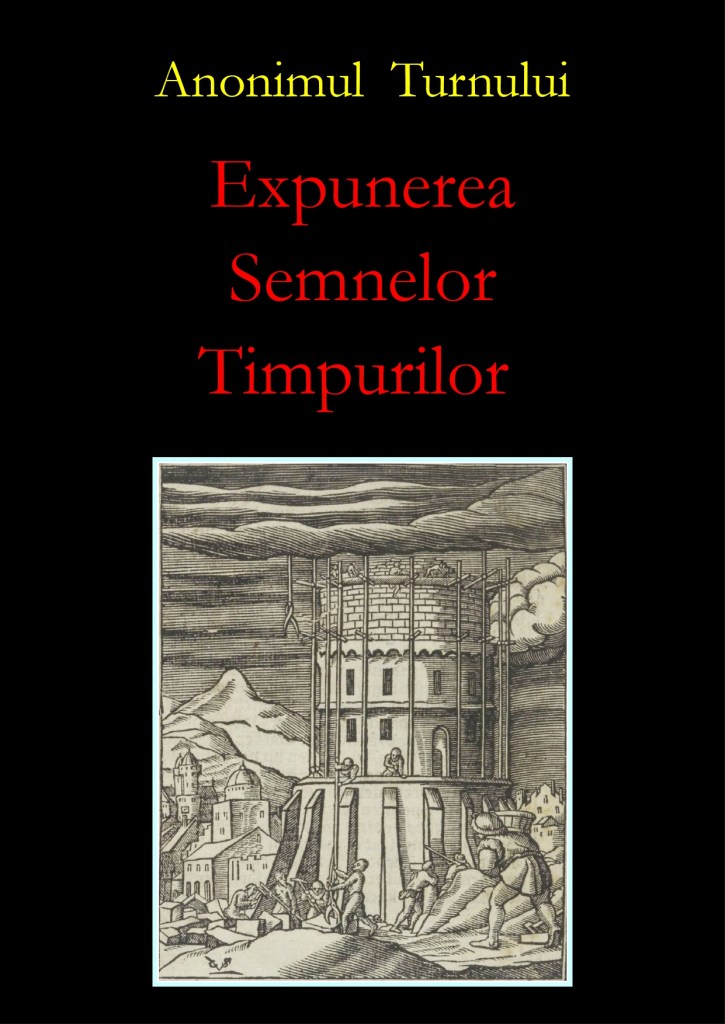
Throughout 2025, a singular cultural phenomenon began to manifest. In various corners of the globe, self-published, staple-bound booklets appeared, bearing the title Exposition of the Signs of the Times and signed under the mysterious pseudonym Anonymous of the Tower. This phenomenon persisted into early 2026, and every indication suggests it is something destined to endure.

These brochures have been discovered primarily in libraries, universities, and public spaces hosting cultural events. The booklet contains poems structured in rhyming couplets, possessing a prophetic and apocalyptic flavor, as hinted by the evangelical resonance of the title. The fact that these pamphlets have surfaced in disparate locations suggests an organized group disseminating a message that readers are invited to decipher.

The cover depicts the Tower of Babel, a choice that naturally invites conspiracy theories. Expressions such as “Brothers of the three points” further fuel speculation regarding links between the booklet and secret societies. A reference to an “unexpected sickness hidden in Chinese boxes” evokes conspiratorial narratives of induced pandemics, leading to a generalized mistrust that the text describes as “the breath of a tuberculosis case” marking the end of days. The warning regarding “nerve gas emanating from the new discourse” seems an enigmatic reference to modern forms of communication.

Furthermore, as the verses speak of a “Church that is not for you” and “globalist sanctuaries,” the work may assume either a religious connotation or a nihilistic existential one. The texts describe “parodic rites” and “impure prayers,” suggestive of messages from a religious sect. Within the poems, there is also mention of a “demon’s murmur in the ear”—perhaps a metaphor for the social media echo chamber, where words of “infinite sweetness” mask a glacial void. Finally, a reference to a “Messiah who will make us all equal” points toward authoritarian or amoral drifts.

The text concludes with the classic apocalyptic admonition:

“He who has ears to hear, let him hear…”

Self-fulfilling prophecies?

Literary divertissement?

A pamphlet intended for the properly Initiated?

Messages from a secret society?

The esoteric scavenger hunt continues…

FREE POETRY eBOOK

Anonymous of the Tower

Exposition of the Signs of the Times

Beyond Orwell

WAR IS PEACE

FREEDOM IS SLAVERY

IGNORANCE IS STRENGTH

The masterpiece of dystopian literature, George Orwell’s 1984, is the landmark text of the fantasy-political genre. Written in 1948, that novel foresaw many of the socio-political characteristics of advanced modernity, but how much of Orwell’s gloomy predictions have actually come true, and in what ways has power implemented its aims of control over citizens?

Orwell took his cue from the great dictatorships of the 20th century of which he was a keen observer. The ‘Big Brother’ regime can be likened to Nazi-fascism in its warmongering aspects, its militarisation of society and its pursuit of a public enemy: the figure of the ‘traitor’ Goldstein is deliberately modelled by Orwell on the Jewish stereotype as it was characterised in extreme right-wing propaganda.

However, it is undeniable that the system described in the novel is much closer to Soviet totalitarianism. The characteristics of social organisation described in 1984 are clearly communist: society is collectivist, there are no appreciable differences in social status, except between party members and ordinary citizens, individual personalities are weak and easily influenced. After all, the ruling party itself is called English Socialism.

But what is most striking is the increasingly obvious parallelism between globalised society and Orwellian dystopia. In fact, globalism is the logical development of communism, whose apparatus of espionage and censorship it has taken over: modern technological means offer politicians tools of control over the masses that would have delighted the STASI, the political police of communist Germany…

The heart of Marxist ideology is the suppression of individual freedoms, and it matters little whether this is achieved through a free market system. And if communism found a counterweight in the western bloc, today globalism finds no structured opposition!

The ‘thoughtcrime’ is an established reality, especially under the vague and all-encompassing heading of ‘discrimination’, a veritable passepartout for discrediting and attacking in law any worldview that does not match the wishes of the globalist oligarchies.

The ‘sexcrime’ is also a reality quite close to how Orwell imagined it. Except that the English writer in his narrative also counted homosexuality as deviant behaviour (as was the case in the Soviet Union). Things from this point of view turned out quite differently: it was indeed difficult even for a visionary like Orwell to imagine that the deification of homosexuality would become the main instrument for gaining political consensus!

In globalism, heterosexual relationships are considered as behaviour to be subjected to strict surveillance by institutions that perform the same function that in the novel is entrusted to the ‘Junior Anti-Sex League’, one of the most powerful political organisations of ‘Big Brother’. The activists of the Junior Anti-Sex League are the exact portrait of today’s feminists, inspired by a sexophobic and misandric morality that is propagated by ideologised women and the preened males who pander to them. These passages from 1984 seem written in the present day:

«It was always the women, and above all the young ones, who were the most bigoted adherents of the Party, the swallowers of slogans, the amateur spies and nosers-out of unorthodoxy…»

«There were even organizations such as the Junior Anti-Sex League, which advocated complete celibacy for both sexes. All children were to be begotten by artificial insemination (ARTSEM, it was called in Newspeak) and brought up in public institutions. This, Winston was aware, was not meant altogether seriously, but somehow it fitted in with the general ideology of the Party. The Party was trying to kill the sex instinct, or, if it could not be killed, then to distort it and dirty it. He did not know why this was so, but it seemed natural that it should be so. And as far as the women were concerned, the Party’s efforts were largely successful».

Reproduction in the 1984 regime was to take place by artificial means, with a gradual abandonment of the ‘natural’ way: this prediction is punctually being fulfilled…

At the same time, Socing granted the masses extensive use of pornography, i.e. it encouraged a sexuality experienced only in a virtual and depersonalised manner, just as it does today!

But perhaps the closest aspect to contemporary reality is the discipline of private property, officially abolished but with the party oligarchy controlling all resources. This is how Orwell describes the new social order:

«It had long been realized that the only secure basis for oligarchy is collectivism. Wealth and privilege are most easily defended when they are possessed jointly. The so-called ‘abolition of private property’ which took place in the middle years of the century meant, in effect, the concentration of property in far fewer hands than before: but with this difference, that the new owners were a group instead of a mass of individuals».

Think of the model of society imposed by globalisation: a small circle of the very rich and an immense multitude of impoverished people who perhaps believe they have achieved equality because they participate in anti-racist demonstrations waving rainbow flags…

The practice of the ‘two minutes of hatred’ also comes close to the great witch-hunts that the system nowadays organises against dissidents, real or presumed: nationalists, racists, homophobes, male chauvinists or more simply conspiracists or followers of alternative cultures are pointed out as the elements that disturb the quiet life and well-being (?!?) of globalised society. And just like the Goldstein of the novel, these ‘enemies’ have all the air of being something that does not even exist, and which is artfully created by the media system to offer a convenient scapegoat for the frustrations of a mass brutalised in misery and ignorance!

As for ‘newspeak’, just think of the cultural genocide that ‘political correctness’ is carrying out on the linguistic and historical heritage that humanity has elaborated over millennia. We are not far from the ‘versifying machinery’ that produces anodyne and insignificant literature so as not to ‘upset’ anyone!

This is how Orwell describes the lyrics of a song designed to entertain the masses:

«It was one of countless similar songs published for the benefit of the proles by a sub-section of the Music Department. The words of these songs were composed without any human intervention whatever on an instrument known as a versificator. But the woman sang so tunefully as to turn the dreadful rubbish into an almost pleasant sound».

As for the ‘control of the past’, we already have the laws that impose state truth on history! The perception one forms of past events is decisive for the interpretation of the present, so politics has intervened on the subject with the complicity of a large number of self-styled ‘intellectuals’ who willingly lend themselves to the suppression of freedom of research.

Incredibly topical is the description of the psychology of the ‘orthodox’, i.e. those who have internalised the ideology of power by conforming to its dictates without even realising it:

«A Party member is required to have not only the right opinions, but the right instincts. Many of the beliefs and attitudes demanded of him are never plainly stated, and could not be stated without laying bare the contradictions inherent in Ingsoc. If he is a person naturally orthodox (in Newspeak a GOODTHINKER), he will in all circumstances know, without taking thought, what is the true belief or the desirable emotion. But in any case an elaborate mental training, undergone in childhood and grouping itself round the Newspeak words CRIMESTOP, BLACKWHITE, and DOUBLETHINK, makes him unwilling and unable to think too deeply on any subject whatever».

All too evident in this description is the portrait of contemporary humanity, numbed by the globalist media system that indoctrinates it from cradle to coffin. The average man is now reduced to a psychic corpse, a kind of zombie who moves without his own will in the directions imposed on him by the system.

The practice of ‘doublethink’, then, is the one that more than any other brings the novel’s atmosphere closer to the hypocrisy of ‘political correctness’, a true phenomenon of personality dissociation that has now become the fundamental trait of mass psychology in the 21st century: a series of thoughts and behaviours that no one believes are adopted without batting an eyelid and are tacitly accepted without reservation. In neo-language, these human types are referred to as ‘goodthinkers’. Orwell speaks to us in these terms of a way of reasoning that stands outside any possibility of critical scrutiny:

«And since the Party is in full control of all records and in equally full control of the minds of its members, it follows that the past is whatever the Party chooses to make it. It also follows that though the past is alterable, it never has been altered in any specific instance. For when it has been recreated in whatever shape is needed at the moment, then this new version IS the past, and no different past can ever have existed. This holds good even when, as often happens, the same event has to be altered out of recognition several times in the course of a year. At all times the Party is in possession of absolute truth, and clearly the absolute can never have been different from what it is now.

It will be seen that the control of the past depends above all on the
training of memory. To make sure that all written records agree with
the orthodoxy of the moment is merely a mechanical act. But it is also
necessary to REMEMBER that events happened in the desired manner. And if it is necessary to rearrange one's memories or to tamper with written records, then it is necessary to FORGET that one has done so. The trick of doing this can be learned like any other mental technique. It is learned by the majority of Party members, and certainly by all who are intelligent as well as orthodox. In Oldspeak it is called, quite frankly, 'reality control'. In Newspeak it is called DOUBLETHINK, though DOUBLETHINK comprises much else as well.

DOUBLETHINK means the power of holding two contradictory beliefs in one's mind simultaneously, and accepting both of them. The Party intellectual knows in which direction his memories must be altered; he therefore knows that he is playing tricks with reality; but by the exercise of DOUBLETHINK he also satisfies himself that reality is not violated. The process has to be conscious, or it would not be carried out with sufficient precision, but it also has to be unconscious, or it would bring with it a feeling of falsity and hence of guilt. DOUBLETHINK lies at the very heart of Ingsoc, since the essential act of the Party is to use conscious deception while retaining the firmness of purpose that goes with complete honesty. To tell deliberate lies while genuinely believing in them, to forget any fact that has become inconvenient, and then, when it becomes necessary again, to draw it back from oblivion for just so long as it is needed, to deny the existence of objective reality and all the while to take account of the reality which one denies--all this is indispensably necessary. Even in using the word DOUBLETHINK it is necessary to exercise DOUBLETHINK. For
by using the word one admits that one is tampering with reality; by a
fresh act of DOUBLETHINK one erases this knowledge; and so on indefinitely, with the lie always one leap ahead of the truth. Ultimately it is by means of DOUBLETHINK that the Party has been able--and may, for all we know, continue to be able for thousands of years--to arrest the course of history».

This is exactly what has occurred with globalism: the impression that history has come to a standstill, that there is no longer any development, no change, no modification of human affairs: the image that the system paints of itself is that of a humanity that has arrived at the messianic ‘fullness of time’, a sort of paradise on earth in which all problems are solved, all difficulties are overcome, everything is within everyone’s reach…

For those who still have some relationship with reality, the impression is that there is nothing for anyone… but on the masses, the rhetoric of infinite progress still manages to have a hypnotic effect!

In the novel, even opposition to the system is… a creation of the regime itself to unearth and neutralise any opponents! Thus in globalism we see political parties that present themselves as alternatives being softened up and swallowed up by the system with impressive speed. As for the phantom subversive groups that pop up from time to time in the news, they really seem scarcely credible and have all the air of media inventions to frighten the lobotomised masses.

And to conclude, it should be noted that Orwell was merely describing what can be achieved by the power of ideology and propaganda, tools of considerable effectiveness, but which today appear to have been superseded by the latest methods of mind control, methods of which there is little official information, but which we can easily imagine

Perhaps in the 21st century there is no longer even a need for the ‘Ministry of Truth’!

The Camp of the Saints

«And when the thousand years are ended, Satan will be released from his prison 8 and will come out eto deceive the nations that are at the four corners of the earth, Gog and Magog, to gather them for battle; their number is like the sand of the sea. 9 And they marched up over the broad plain of the earth and surrounded ithe camp of the saints and jthe beloved city, but fire came down from heaven and consumed them ».

Apocalypse 20, 7-9

From this biblical quotation is taken the title of the apocalyptic novel The Camp of the Saints by Jean Raspail, published in 1973.

Briefly, the plot of the work is as follows: in 1997, a mob of poor people from India decides to seize a fleet to invade Europe. The mob, led by a sinister figure known as the ‘coprophage’, with the complicity of Christian missionaries and ‘humanitarian’ organisations, succeeds in their intent and begins their threatening journey. The ruling classes of the European nations are bewildered by the events and all they can imagine is preparing the ground for the invasion by means of a hammering propaganda campaign to make public opinion accept the advent of the multiracial society. When the immigrant fleet arrives on the Côte d’Azur, a group of Frenchmen attempting to resist is bombarded by the same French air force sent by the government to protect the immigrants’ triumphal march. The immigrants then find no opposition militarily, let alone institutionally: a neo-communist regime is immediately established that expropriates homes from their owners and starts the occupations of houses by the black hordes. Raspail, with an effective simile, compares the invasion of the West by immigrants to the fall of Constantinople conquered by the Turks in 1453.

Raspail’s stylistic expertise is truly masterful: the novel, centred on the relatively short time of the few weeks it takes ships to travel from India to Europe, delves deep into the collective psychology of the human groups that are the novel’s protagonists. The masses of immigrants are driven by a spirit of conquest, and pursue their goal with unwavering conviction, refusing any offer of compromise. The Westerners who are accomplices of the immigrants, missionaries and politicians, on the other hand, are driven by personal gain and endless resentment, and feel entirely devoted to the cause of the annihilation of their own civilisation. But Raspail’s literary genius manifests itself above all in his description of the European populations, subjected to the constant hammering of multiracial propaganda, which is mostly passively accepted, even if at times the citizens are touched by doubts as to whether the advent of the multi-ethnic ecumene is really the best of all possible worlds. Raspail’s pen reaches tragicomic heights that are hard to match when he describes primary school children who, instigated by their teachers, draw immigrants going to school, to work, to the shops…
Not to mention a song about reception specially commissioned by the government and broadcast on all radio and television stations with manic repetitiveness.

Raspail’s work is cynical and disillusioned, and in this harshness there is all the evil will that drives the occult forces to build the satanic kingdom of globalisation: the imposition of mestizaje has produced a scenario of institutional chaos, daily violence and generalised degradation that well summarises the attitudes and objectives of the globalist ruling class.

The Camp of the Saints may have seemed like a work of political fiction when it came out, but within a short time Europe was swept by a wave of migration that drew public attention to this text and even inspired a fine film: The Second Civil War (directed by Joe Dante, 1997). Unfortunately, it was not only alternative culture enthusiasts who took an interest in The Camp of the Saints, but also ‘democratic’ censors, who tried to conceal the novel or at least keep it away from the circuits of large-scale publishing distribution.

More than 50 years after the book’s publication, it must unfortunately be noted that the sad reality has now overtaken the French novelist’s imagination, but The Camp of the Saints is still a provocative and regenerating reading for those who do not want to surrender to the globalist thought.

***

Jean Raspail, The Camp of the Saints, vauban Books, 2025


Dissoluzione

Martino Mora è una figura di spicco nel fronte dei ribelli che cercano di resistere all’oppressione mondialista. Nel 2021 ha anche avuto un quarto d’ora di celebrità per una brillante iniziativa di disobbedienza civile, essendosi rifiutato di fare lezione in un’aula di liceo nella quale andava in scena una pagliacciata “gender”. A partire da quell’assurda vicenda che ricorda la Rivoluzione Culturale della Cina maoista, il professor Mora ha cominciato un percorso di divulgazione culturale che lo ha reso un punto di riferimento significativo del pensiero anticonformista.

Nel 2025 è uscito il suo libro Dissoluzione. Perché la nostra civiltà sta morendo, un testo importante che analizza le tappe della Via crucis che ha portato il mondo occidentale all’attuale atteggiamento suicidario che probabilmente metterà fine alla civiltà costruita sulla filosofia greca e sulla religione cristiana. Questo saggio offre gli spunti per individuare e approfondire le cause che hanno portato alla decadenza della civiltà occidentale.

Dissoluzione è una diagnosi precisa e circostanziata sulle cause del declino inarrestabile e dell’atteggiamento di cupio dissolvi di cui si è ammalato il mondo euro-americano. La trattazione è imperniata sulla denuncia del carattere manipolatorio e truffaldino della democrazia liberale, nata da una lunga marcia della ragione calcolante e dell’economicismo che hanno ridotto il mondo a mercato e l’uomo a consumatore. Al punto di non ritorno si è arrivati col movimento del ‘68, autentica epifania anticristica che ha dato inizio all’incubo distopico del “mondo al contrario”. Alla base di questo approccio alla realtà c’è l’individualismo, le cui origini si possono rilevare nella disputa sugli Universali che animò il dibattito filosofico nel Medioevo e che si concluse col sostanziale primato del pensiero nominalista dal quale prende forma il soggettivismo moderno. Mora supporta il suo discorso con autori classici della critica alla modernità prevalentemente di matrice cattolica, come De Maistre e De Bonald. Ma si trovano anche spunti derivati da Nietzsche, Spengler, Evola, Guénon, nonché riferimenti all’antropologo Louis Dumont e a studiosi contemporanei che hanno indagato le cause del nichilismo, come Emmanuel Todd.

Inoltre un autore che Mora ritiene particolarmente indicato per esaminare lo spirito della civiltà del denaro è Georg Simmel, autore del saggio Filosofia del denaro. Quel testo, pubblicato nel 1900, può essere ancora molto utile per illustrare la capacità di desertificazione interiore che lo spirito mercantilistico esercita sugli animi.

Mora divide il libro in capitoli che ci parlano dei fenomeni e delle tecniche mondialiste per l’appiattimento dell’umanità: la grande sostituzione, la Rivoluzione Omosessualista, l’eclissi della Chiesa Cattolica…

Quest’ultimo tema sta particolarmente a cuore a Mora, cattolico sempre più perplesso nel tempo dei ministeri allucinati di Bergoglio e del suo successore Prevost che Mora definisce un “Bergoglio dal volto umano”, ovvero appena più moderato nel linguaggio rispetto al papa argentino, ma ugualmente intento a sciogliere la Chiesa nell’acido dell’ecumenismo e del relativismo etico. In termini cristiani la globalizzazione ha tutti i caratteri di una teocrazia satanica!

Infine il libro tira le somme sull’attuale clima apocalittico chiedendosi quale postura debba assumere l’umanità differenziata che non accetta l’omologazione mondialista.

Sotto la bandiera dei “diritti umani” l’abominio globalista ha fatto mercato di tutto. Anche i figli possono essere comprati, a partire da ovuli e sperma, e c’è anche chi teorizza la possibilità di vendere organi del corpo, come sostiene il presidente argentino Milei.

A integrazione delle osservazioni di Mora occorre notare che il capolavoro della civiltà mercantilista è stato quello di riuscire a monetizzare i sentimenti. Le ideologie progressiste, fondate sull’odio contro il maschio bianco eterosessuale, sono riuscite a instaurare una legislazione che punisce quello che loro ritengono “odio” quando tale sentimento è indirizzato alle categorie che la sinistra vuole insediare al vertice della piramide sociale (principalmente immigrati e omosessuali). Il senso di questa legislazione non è solo quello di tappare la bocca ai dissidenti, ma soprattutto di ricavare denaro sotto forma di risarcimento di “danni morali”. Analogo discorso vale per l’apparato giuridico che regola i rapporti fra uomini e donne, ormai divenuto uno strumento per esercitare estorsioni legalizzate ai danni dei maschi.

Possiamo aspettarci, a questo punto, che qualsiasi relazione umana, anche solo di carattere amicale, sia sottoposta a regolamentazione giuridica e a quantificazione economica!

Mora dedica le parti finali del libro allo scenario politico e mediatico italiano, che è a dir poco desolante. I partiti “sovranisti” che avrebbero dovuto essere avversari del globalismo sono letteralmente portati al guinzaglio dal sistema: la sinistra detta l’agenda politica anche quando perde le elezioni. In un paese condannato da impietose statistiche demografiche, la “destra” non ha saputo far di meglio che assecondare immigrazionismo e femminismo. Se in alcuni paesi si manifestano movimenti politici identitari che contrastano efficacemente l’Impero del Male globalista, in Italia il personale politico di “destra” appare di infimo livello sul piano umano e del resto riflette anche l’atteggiamento di una popolazione passiva, demotivata e ormai sprofondata in uno stato catatonico.

La disgregazione sociale è il carburante del libero mercato, per cui la sinistra è inondata di denaro dalla maggior parte dei grandi capitalisti, e questo dà ai progressisti un vantaggio decisivo nella realizzazione di un consenso costruito a tavolino. Tuttavia un motivo di speranza è proprio questo totale scollamento fra classi dirigenti e popolazione. Anche le oligarchie sanno che c’è una parte ampiamente maggioritaria di popolazione che avverte il peso della tirannia mondialista: le vittime del globalismo aspettano solo di prendere coscienza della loro condizione subalterna e non hanno nulla da perdere, se non… le loro catene!

Come si diceva all’inizio, il libro di Mora costituisce un’attenta diagnosi, ma resta piuttosto vago riguardo le possibili soluzioni. Sul piano umano tutto sembra perduto, tuttavia Mora, in quanto cattolico, ha fiducia in un intervento divino in soccorso della Chiesa intesa come Corpo Mistico di Cristo (mentre non ripone alcuna speranza in un clero venduto al potere mondialista).

Su questo punto osserviamo che si può aprire un dibattito che porterebbe lontano: il Cristianesimo è la soluzione o è il problema?

Lo stesso Mora cita la famosa massima di Chesterton: «il mondo moderno è pieno di idee cristiane impazzite».

Del resto, anche senza arrivare a Nietzsche, già Machiavelli notava che la religione cristiana rende gli animi effeminati…

Il messaggio di Cristo può essere la cura per il male dell’individualismo?

Può significare qualcosa il fatto che la Chiesa Cattolica nell’ultimo mezzo secolo sia divenuta la scuola di formazione politica della sinistra?

Ai posteri l’ardua sentenza…

Il saggio di Mora è comunque un testo che offre molte indicazioni utili per decostruire le mitologie progressiste, indipendentemente dai percorsi culturali da cui provengono i lettori.

Per ora facciamo tesoro delle indicazioni che ci offre il coraggioso professore milanese, tenendo presenti le parole di Giovanna d’Arco che lui stesso cita nel suo libro:

«Bisogna dare battaglia, perché Dio conceda la vittoria!»

***

Martino Mora, Dissoluzione. Perché la nostra civiltà sta morendo, Edizioni Radio Spada, 2025, p.190

Edizioni Radio Spada – Home